Summarise With AI


The MHT CET Paper Analysis 2026 for the April 20 shift 1 suggests the overall question paper was moderate to tough. Following the trends, the MHT CET 2026 Analysis suggests that the math section was the toughest and the chemistry section was the easiest.
Along with the MHT CET Exam Analysis, students can also refer to the MHT CET Answer key to cross-check their responses and predict their scores before the result announcement. Analyzing the paper helps students plan their preparation more effectively, thereby increasing their chances of admission to some of the best colleges.
Also Check:MHT CET 18 April Shift 2 Exam Analysis
MHT CET Paper Analysis April 20 Shift 1
The MHT CET April 20 shift 1 was held from 8:00 to 12 P.M After the shift got over, we came up with the MHT CET Paper Analysis April 20 Shift 1. Overall, the level of difficulty in MHT CET April 20 Shift 1 was considered moderate to difficult, mainly due to the lengthy and challenging Mathematics paper. Take a look at the subject-wise MHT CET difficulty level below.
| Subject | Difficulty Level |
| Overall | Moderate to tough |
| Physics | Moderate |
| Chemistry | easy |
| Mathematics | Moderate to Difficult / Lengthy |
Curious about how the difficulty level of the paper affects your score? Use our MHT CET Percentile Predictor to see where you stand based on today’s shift.

Candidates had to answer 150 questions in total in the MHT CET PCM Paper, with 50 from Physics, Chemistry, and Maths. Physics and Chemistry will take up the first 90 minutes of the test. Take a look at the subject-wise MHT CET paper analysis described below
April 20 shift 1 MHT CET Paper Analysis for Math
In the MHT CET Paper Analysis, April 20 shift 1, mathematics is generally perceived as hard or lengthy. While some students felt the questions themselves were easy, the time management required for the lengthy calculations made it difficult to complete the section. Now, take a look at the Key Topics from where questions are asked in this shift
| Topic | Key Highlights |
| Calculus (Integration Focus) | A major portion of the paper was based on Integration and core Calculus concepts |
| Differential Equations | Questions on Order & Degree, Variable Separable form, and finding Particular Solutions |
| Vectors & 3D Geometry | Problems on Volume of a Tetrahedron (given value 11/6 to find x), angle between a line and a plane, and perpendicular vectors using dot product |
| Matrices | Focus on Inverse, Invertibility, Cofactors, and Transpose operations |
| Trigonometry | Questions from inverse trigonometric functions and identities (e.g., cos⁻¹ + sin⁻¹ type expressions) |
| Differentiation | Finding dy/dx for implicit functions using shortcut methods (e.g., result like y/x) |
| Other Topics | Area between parabola & line, Mathematical Logic, and Linear Programming Problems (LPP) |
April 20 shift 1 MHT CET Analysis for Chemistry
Following the trends, the chemistry Section was widely considered the easiest subject of the shift. Students noted that the questions were straightforward and often taken “line-by-line from the textbook.
| Section | Key Highlights |
| Physical Chemistry | Strong presence of Solutions, Chemical Kinetics, and Mole Concept; questions were often mixed. Thermodynamics and Thermochemistry also had good weightage |
| Organic Chemistry | High weightage; considered a “good” scoring section but options were tricky, requiring careful selection |
| Inorganic Chemistry | The major portion of the paper, along with Organic and Physical Chemistry |
MHT CET Paper Analysis for April 20 shift 1 Physics
The MHT CET Analysis suggests the physics section is rated as easy to moderate. The following are the key Topics where questions are asked in this shift
| Topic | Key Highlights |
| Current Electricity & Electrostatics | Basic questions like Ohm’s Law (V = IR) and force on a charge in an electric field (F = qE) |
| Atomic Structure | Questions on Lyman, Balmer, and Paschen series, including ratios of shortest/maximum wavelengths |
| Dual Nature of Radiation | Numerical-based questions on Threshold Frequency and Work Function |
| Semiconductors | Focus on PN Junction (depletion region, barrier potential) and Zener Diodes |
| Electromagnetic Induction | Questions on Self-Inductance (effect of turns/radius) and Mutual Inductance |
| Thermodynamics & KTG | Isothermal process (work done, internal energy) and 2–3 questions from Kinetic Theory of Gases |
| Oscillations (SHM) | Questions on maximum velocity, acceleration, and energy at different positions |
Students’ Reviews on MHT CET PCM Paper
After the shifts ended, we spoke with the test takers who were leaving the exam center about the MHT CET Paper Analysis for this shift. Based on student feedback from the MHT CET 2026 PCM 20 April Shift 1 exam, here is a breakdown of their reviews:
- According to Arman Bagwan, the paper was average, with Chemistry easy, Physics average, and Mathematics difficult because of extensive Calculus; he is determined to improve his time management and Calculus skills.
- According to Pranaya Potdar, the paper was easy to average, with Chemistry being very easy (based on textbooks), Physics easy to average, and Mathematics long, and expected to score 110-120 marks for a percentile of about 95.
- According to Srushti Somnath Jadhav, the paper was easy, with Chemistry being the easiest and Physics being average, and she wants to avoid making stupid mistakes, especially in Physics calculations and selecting questions.
- According to Ruchida Santosh, the paper was easy, with Physics and Chemistry being doable and Mathematics average, but she had problems in distributing her time properly and does not intend to sit in the next attempt.
- According to Harshad, the paper was average, with Physics and Chemistry very easy but Mathematics difficult, and he plans to improve his Trigonometry in the next attempt.
MHT CET Question Paper Marking Scheme
Having an idea of the marking scheme for the MHT CET PCM Paper very crucial. It should be noted that there is no negative marking in the exam. Check the MHT CET Question paper pattern for the PCM group below
| Particulars | Details |
| Mode of Examination | Computer-Based Test |
| Number of Sections | Section 1- Physics and ChemistrySection 2- Mathematics |
| Duration of Exam | 180 minutes (90 minutes for each section) |
| Medium | Mathematics will be in the English languagePhysics and Chemistry will be in English/Urdu/Marathi |
| Type of Questions | Multiple Choice Questions |
| Total number of Questions | 150 Questions (50 from each subject) |
| Total Marks | 200 marks (100 marks for each section) |
| Marking Scheme | Physics & Chemistry – 1 mark will be awarded for every correct answer.Mathematics – 2 marks will be awarded for every correct answer. |
| Negative Marking | No negative marking |
MHT CET Answer Key 2026 April 20 Shift 1
The MHT CET Answer Key 2026 for each of the exam shifts is set to be announced in the first week of May 2026 by the State CET Cell. Firstly, an initial MHT CET answer key will be published on the website along with the question paper and response sheet PDF. Students will be given a certain time frame to contest the provisional MHT CET 2026 answer key.
For those candidates appearing for MHT CET April 20 Shift 1, and wanting to check their scorecard before the official announcement of the results, they can refer to the unofficial answer key on CollegeDost.
Access MHT CET Answer Key 2026 by CollegeDost
Calculate MHT CET Score using MHT CET 2026 Answer Key
With the help of the MHT CET Paper analysis and memory-based question paper with answer key for Shift 1, April 20, candidates can easily calculate their score and chances of admission into MHT CET. Follow the process below to calculate your MHT Score
- Understanding the Marking Scheme: According to the pattern of the MHT CET, Physics and Chemistry will carry 1 mark each for every correct answer, whereas Mathematics will have 2 marks for every right answer. No marks are deducted for incorrect answers.
- Calculating Your Score of Correct Responses: Calculate the total number of correct responses for each subject using your answer sheet or memory about the questions.
- Scoring Your Estimated Marks: Multiply the number of correct responses by the marks for each question in that subject and calculate your total estimated score.
- Using a Percentile Calculator Tool: Enter your estimated score and shift of the exam into the percentile calculator tool to know the expected range of percentile score.
- Normalizing Process: Since MHT CET follows the normalization process, your percentile score might differ slightly due to the toughness of the paper.
What is a good score for the April 20 shift 1?
Based on the MHT CET Paper Analysis 2026, the morning shift is moderate to tough and more time-consuming than other shifts; the marks needed to achieve a higher percentile might be slightly lower than in the case of an “easier” shift.
As per experts and students’ perception, a good percentile for this particular shift would start at 95 percentile marks. Students who aspire to join some of the prestigious colleges would have to score between 150 and 160+ marks to achieve a percentile of 99+.
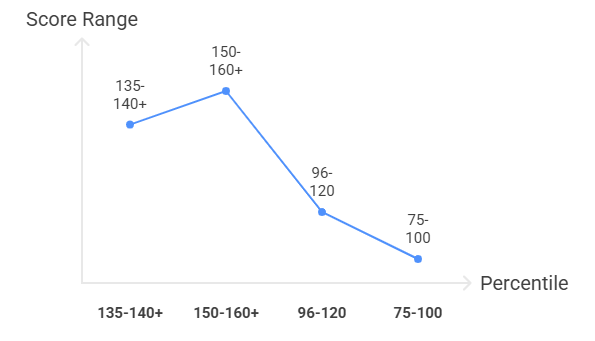
Expected MHT CET Marks vs percentile based on April 20 shift 1 Analysis
On the basis of the MHT CET 2026 Paper analysis, April 20 shift 1, we can share the expected MHT CET marks vs. percentile comparison below for a rough idea.
| Percentile | Estimated Marks Required |
| 99%ile | 135 – 140+ marks |
| 98%ile | ~120 marks |
| 95%ile | ~96 – 120 marks |
| 92%ile | ~86 marks |
| 90%ile | ~75 – 80 marks |
Conclusion
From the MHT CET 2026 April 20 Shift 1 paper analysis, it is evident that the exam difficulty was moderate to moderately tough. It is mainly because of the lengthy nature of the mathematics paper that demands a lot of calculations, which makes it difficult to complete within the allotted duration. Students who were good at managing their time, maintaining accuracy, and had proper conceptual clarity in Mathematics and Physics subjects would have performed much better in this exam.
Frequently Asked Questions
1. What was the level of MHT CET April 20 Shift 1?
2. What is the easiest section in this Shift?
3. What subject do you think was toughest in this shift?
4. When will the official MHT CET Answer key be out?
5. Is there negative marking in MHT CET 2026?
6. What is a good score in 20 April 2026 Shift 1 exam?
7. How can students estimate their score and percentile?
Students can calculate their score using an answer key, marking scheme, response sheet, and percentile predictor calculator.